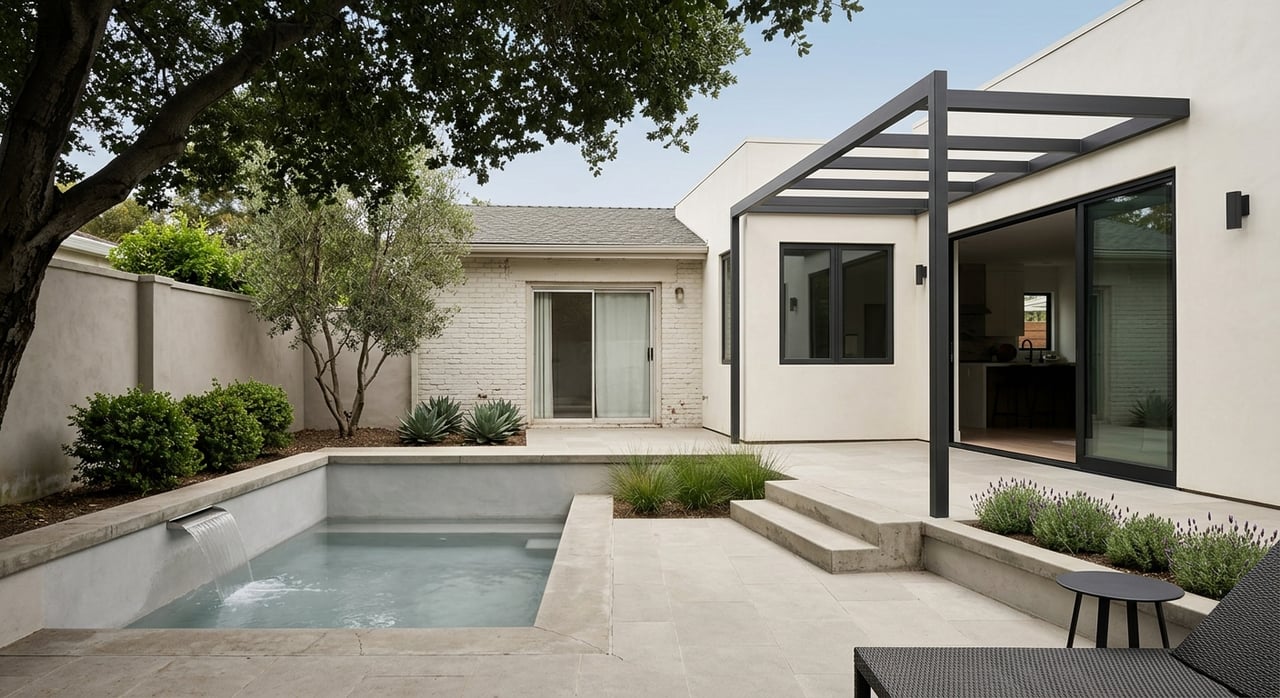
If you are shopping in Calabasas, one question can shape your entire search: do you want a home you can enjoy right away, or one you can improve over time? In a market where home values are high and many properties were built decades ago, that choice is not just about style. It is about budget, timing, flexibility, and how much complexity you want to take on. Let’s dive in.
Why this choice matters in Calabasas
Calabasas is a predominantly residential market with about 9,200 housing units as of 2020, and more than three-quarters of the housing stock is single-family. Census QuickFacts reports an owner-occupied rate of 68.5% and a median owner-occupied home value of $1,504,500. More recently, Redfin reported a median sale price of $1,828,905 for the three months ending May 2026, while Zillow estimated an average home value of $1,726,419 as of May 31, 2026.
In other words, you are making this decision in a market where the price of entry is already significant. That raises the stakes. Choosing between remodel potential and turnkey living in Calabasas is often less about finding a bargain and more about finding the right fit for your timeline, priorities, and tolerance for future work.
Calabasas homes are often older than they look
Calabasas developed later than many surrounding Los Angeles communities. According to the City, growth did not really accelerate until the late 1960s, and fewer than 200 buildings predate 1960.
That matters because an “older” Calabasas home is often not a historic property in the traditional sense. More commonly, it is a home from the 1960s, 1970s, or 1980s with a desirable location and lot, but systems, finishes, or layouts that may feel dated by today’s standards.
Where remodel potential usually shows up
The City’s Housing Element says 73% of Calabasas housing stock was built before 1989. The largest share was built in the 1980s, followed by the 1990s, 1970s, and 1960s. That age mix is one of the clearest signals that remodel opportunities do exist here.
The same report estimates that about 20% of pre-1989 homes, or roughly 1,300 units, may need some level of rehabilitation. That can include updates such as new plumbing, roof repairs, foundation work, and similar improvements. For buyers, this often points to homes with good bones rather than distressed condition.
Older does not automatically mean fixer
This is an important distinction in Calabasas. A city windshield survey of older single-family neighborhoods found only 30 deteriorating homes out of 3,050 observed, or about 1% with visible deferred maintenance.
So if you are hoping to find a dramatic fixer, you may find fewer than expected. Many older homes are still well maintained. The better question is whether the home offers a practical layout, a usable lot, and enough upside to justify future updates.
What turnkey living means in Calabasas
In Calabasas, turnkey usually means more than fresh paint and updated countertops. It often means the major work has already been done, including important system updates, code-sensitive improvements, and layout changes that support how buyers want to live today.
That can be especially appealing in a market where homes have recently sold in about 41 days on average. If you want a shorter path to move-in and less uncertainty about hidden costs, a turnkey home can offer a smoother experience.
Why buyers choose turnkey
Turnkey living tends to appeal to buyers who value predictability. You may prefer this route if you want to avoid the disruption of construction, reduce your exposure to permitting and review, or simply settle into the home quickly.
In practical terms, turnkey can make sense if your priority is time. It can also be the right choice if you do not want to manage contractors, navigate city processes, or absorb the risk of discovering more work once a project begins.
Why buyers choose remodel potential
A remodel candidate can make sense if you care more about personalization than speed. In Calabasas, that often means finding an older but well-kept home in a solid location and updating it over time to better match your needs and style.
This route may also appeal to buyers who are comfortable evaluating structure, layout, and site conditions instead of focusing only on finishes. With the right property, you may be able to create something more tailored than what the turnkey market currently offers.
The sweet spot for many buyers
In Calabasas, a practical middle ground is often an older, maintained home with a usable lot and a floor plan that does not require major structural contortions. That kind of property can offer room for improvements without the full burden of a heavy project.
For many mid- to upper-tier buyers, this balance is attractive. You get a home that works now, along with flexibility to upgrade key areas over time.
What to evaluate before buying a project house
If you are leaning toward remodel potential, the lot can be just as important as the house itself. In Calabasas, site conditions and development rules can shape what is realistic long before finishes or design choices come into play.
A home may look like an easy cosmetic update, but future expansion can become more complex depending on slope, visibility, and review requirements. That is why you want to study both the structure and the setting.
Check the site, not just the floor plan
The City notes that mapped ridgeline standards can affect grading, site planning, architectural design, landscape treatment, slope maintenance, and hazards. It also says that properties within 500 feet of Scenic Corridors along Mulholland Highway, Las Virgenes Road, Old Topanga Canyon, and the Ventura Freeway are subject to Scenic Corridor Development Guidelines, and homes visible from those corridors can be subject to them as well.
For a buyer, that means the most remodel-friendly homes often have:
- a relatively flat or gently sloped usable pad
- enough side-yard or rear-yard depth for expansion
- fewer ridgeline or scenic-corridor constraints
- a floor plan that can be improved without major structural changes
Understand the review process
Some projects are straightforward, but not all. The City’s development process explains that more complex work can involve Development Review Committee review, CEQA review, public hearing steps, plan check, and permits.
Calabasas has also adopted the 2025 California Building Code and related state code packages. So even if a remodel seems simple at first glance, code compliance can affect cost, timing, and scope.
Watch for added design context
Certain properties may face additional design review. The City says residential projects in scenic corridors, the Old Topanga and Highlands overlay areas, proposed subdivisions, and hillside developments may be reviewed by the Architectural Review Panel.
Old Town Calabasas can also present a different design context. The City adopted the Old Town Calabasas Master Plan and Design Guidelines in 1994 and later a Historic Preservation Ordinance in 2008, so homes in that core may come with different considerations than tract homes elsewhere in the city.
ADU potential can change the equation
If future flexibility matters to you, ADU potential deserves close attention. Calabasas allows ADUs and JADUs on properties with existing or proposed single-family dwellings, and ADUs can be created through conversions, attached additions, or detached new construction.
The City also offers Pre-Approved ADU Plans intended to simplify plan checks and speed permit issuance. For some buyers, that can make an older home with extra lot utility more appealing than a polished turnkey home with less room to grow.
How to decide which path fits you
There is no one-size-fits-all answer in Calabasas. The right choice depends on how you weigh convenience, control, budget, and future plans.
If you want a home that feels easy from day one, turnkey may be worth the premium. If you want to shape the home around your lifestyle and can tolerate more time, planning, and uncertainty, remodel potential may offer the better long-term fit.
A smart decision usually starts with a clear look at the property’s age, condition, lot usability, and likely review path. In a market like Calabasas, that kind of technical perspective can be just as important as the finishes you see on day one.
When you want to compare remodel potential against turnkey living with a sharper eye for layout, lot constraints, and renovation scope, The Jenna Kaye Group brings the construction fluency and high-touch guidance to help you evaluate what truly fits your goals.
FAQs
Is an older Calabasas home always a fixer?
- No. City survey data suggests many older Calabasas homes are still well maintained, so age alone does not determine whether a home needs major work.
Which Calabasas homes usually offer the best remodel potential?
- Homes built in the 1960s through 1980s often offer the clearest remodel potential, especially when they have a usable lot, a practical floor plan, and fewer site constraints.
What should buyers check before choosing a Calabasas project house?
- You should look at ridgeline issues, scenic corridor rules, slope, lot usability, and whether future work may require planning review in addition to permits.
What does turnkey living usually mean in Calabasas?
- In Calabasas, turnkey usually means a home with updated finishes, major systems already addressed, and a layout that needs little or no rework before move-in.
Can ADU potential make an older Calabasas home more attractive?
- Yes. Calabasas allows ADUs and JADUs on qualifying single-family properties, and that added flexibility can make an older home more appealing if the lot supports future improvements.