If you have been watching Ventura County luxury real estate, you may have noticed a shift: ranch properties still draw serious interest, but buyers are asking sharper questions and taking a little more time. That can feel exciting if you are looking for land, or frustrating if you are trying to time a sale. The good news is that the market is not losing appeal. It is becoming more selective, more informed, and more shaped by the details that make a ranch truly usable. Let’s dive in.
Ventura County ranch market today
Ventura County’s overall housing market remains active, but it is not as compressed as it was during the tightest part of the last cycle. As of spring 2026, countywide figures show roughly 2,500 homes for sale, median listing prices near $949,500, median sold prices around $890,000 to $899,000, about 42 median days on market, and a sale-to-list ratio near 99%.
That matters for luxury ranch owners and buyers because it points to a market that still leans seller-favorable, but gives buyers more room to compare options. Inventory has also risen meaningfully year over year, with SCAG reporting a 43% increase in 2025. In plain terms, there is more choice than there was, but truly special acreage is still hard to replace.
More balance, not a downturn
The biggest change is not a collapse in demand. It is a move toward balance. Buyers are still willing to pay for the right property, but they are less likely to overlook land-use limits, utility issues, deferred maintenance, or overpricing.
For sellers, that means presentation and property documentation matter more than ever. For buyers, it means you have a better shot at finding a ranch that fits both your lifestyle and your operational needs.
Why Ventura County ranches stay in demand
The luxury ranch segment in Ventura County has a built-in scarcity factor. County land-use rules under the SOAR framework help preserve Agricultural, Rural, and Open Space designations unless voters approve changes. In many cases, that means minimum parcel sizes remain large, with rural parcels starting at two acres, agricultural parcels at 40 acres, and some open-space parcels at 20 acres when contiguous with agriculture.
That kind of framework supports long-term land scarcity. In a market where many new homes are being built at higher density, large-lot properties are simply not being reproduced at the same pace.
Land is often the true luxury asset
With ranch and estate properties, the value is not just in the residence. It is often in the land itself, the layout, the legal use, the privacy, and the ability to actually live the lifestyle the property suggests.
Ventura County offers a rare mix of open space, working agriculture, and access to urban job centers. The county spans 1.2 million acres, includes 42 miles of coastline, and has nearly half its landmass in Los Padres National Forest. Farmland and forest together account for about half the county’s acreage, and agriculture contributes more than $2.3 billion annually.
That backdrop helps explain why the ranch market keeps its appeal. Buyers are not just purchasing a home. They are buying into a landscape that still supports farming, ranching, equestrian use, and a more land-rich way of living.
What buyers want now
Today’s luxury ranch buyer is often more practical than people assume. Yes, aesthetics matter. Views, architecture, outdoor living, and privacy still drive emotion. But many buyers are looking past the photos and focusing on whether the property truly functions.
That is especially true in Ventura County, where water, land use, and access can directly affect enjoyment, cost, and even financing.
Function is driving decision-making
Buyers are paying close attention to:
- Legal land-use status
- Acreage layout and usability
- Water source and reliability
- Private wells and water-quality documentation
- Septic systems
- Barn, arena, turnout, and fencing condition
- Access roads and circulation
- Trail access and equestrian infrastructure
- Any Land Conservation Act or SOAR-related limitations
The county’s Drinking Water Program adds another layer of diligence. Private onsite wells must meet certification requirements, and documentation may include water-quality records plus plot plans showing wells, tanks, water lines, septic systems, structures, and animal pens. That means a ranch is being evaluated as an operating property, not just a luxury image.
Equestrian appeal remains strong
For horse-focused buyers, Ventura County continues to stand out because infrastructure exists beyond the property line. Ventura County Parks reports more than 20 miles of hiking, biking, and horseback trails, and the Ojai Valley Trail includes a separate dirt bridle path.
That matters because equestrian buyers often judge a property in context. A good barn is important, but so is the surrounding trail network, hauling convenience, and overall horse-friendly usability.
Who is shaping demand
Several buyer groups appear to be driving interest in this segment. One is the local move-up buyer coming from places like Thousand Oaks, Westlake Village, and nearby suburban communities, looking for more land and fewer typical tract-style constraints.
Another is the equestrian or ranch user who needs the property to work on a daily basis. These buyers care deeply about arena footing, barn configuration, fencing, turnout, water infrastructure, and safe access.
A third group is relocation and lifestyle buyers from outside the area. Ojai’s home-search patterns show inbound interest from metros such as San Francisco, Boston, and Seattle, suggesting Ventura County continues to attract buyers who want a different pace and more space.
Micro-markets matter more than county averages
One of the biggest mistakes in the luxury ranch space is treating Ventura County as a single, uniform market. It is not. A ranch in Ojai, an estate in Santa Rosa Valley, a land-rich property near Somis, and a luxury home competing with Westlake Village or Calabasas buyers can each behave differently.
Countywide numbers provide useful context, but they do not replace micro-market analysis. In this segment, pricing confidence comes from the closest relevant comparables, not broad median figures alone.
Ojai, Malibu, Calabasas, and Westlake Village offer perspective
Ojai is a strong benchmark for the county’s rural-lifestyle appeal. In April 2026, Redfin reported a median sale price of $1.25 million, 52 median days on market, a 100% sale-to-list ratio, and a notable split between homes selling above list and homes taking price cuts. That tells you demand is real, but buyers are still selective.
Malibu sits at a very different price point, with a median sale price of $4.0 million, longer market times, and a lower sale-to-list ratio. Calabasas and Westlake Village sit between these ends of the spectrum, offering high-end suburban and lifestyle competition but with a different land story.
Ventura County’s edge is that it can compete on lifestyle without trying to mimic dense luxury suburbs or premium coastal pricing. For many buyers, that is the opportunity.
What this means for sellers
If you own a luxury ranch or equestrian property in Ventura County, the market still offers strong potential. But the formula has changed. The best results are likely going to properties that combine realistic pricing, strong presentation, and clear proof of usability.
That means your marketing should do more than show beautiful sunset photos. It should explain how the property lives, how the land works, and what makes it credible as a ranch, estate, or equestrian offering.
Preparation can shape your outcome
Before going to market, sellers should be ready to organize key details such as:
- Parcel size and configuration
- Zoning or land-use designation
- Well, water, or utility documentation
- Septic information
- Barn and arena specifications
- Condition of fencing, gates, and access roads
- Any known restrictions tied to agricultural or open-space status
In a more balanced market, this level of preparation can help reduce uncertainty for buyers. It can also support cleaner negotiations and stronger confidence in value.
Storytelling still matters
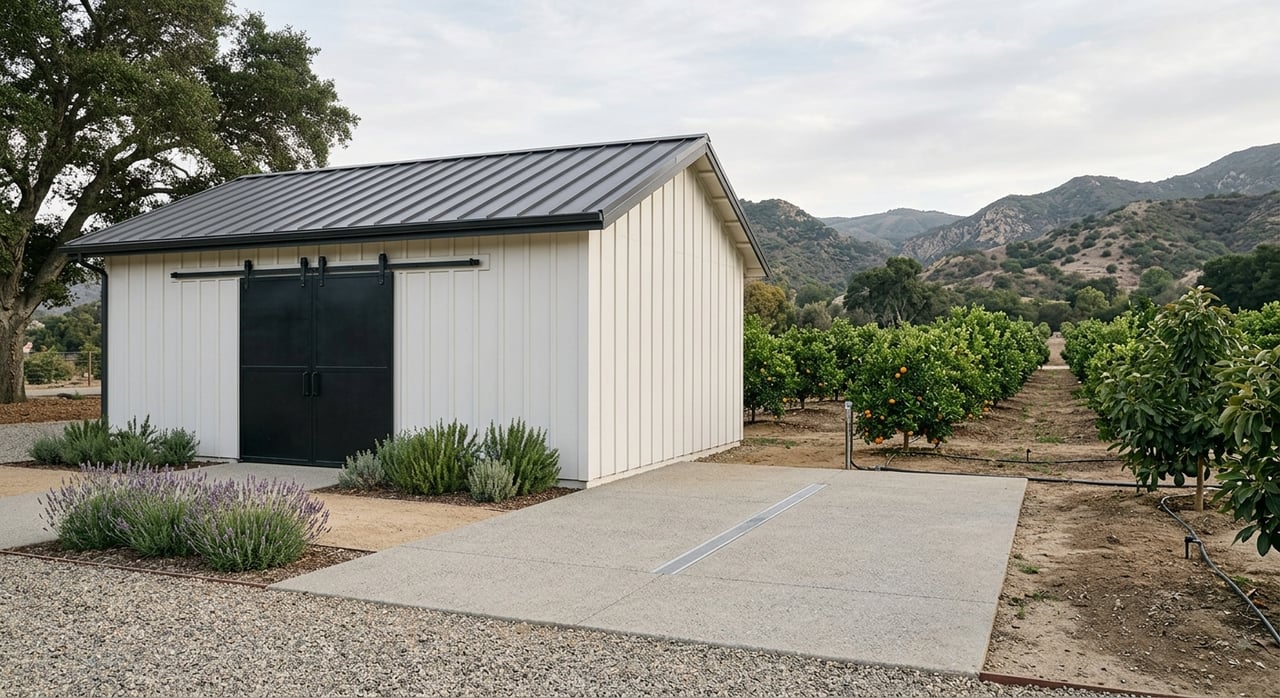
Even in a more detail-driven market, emotion still matters. Buyers respond to the experience of a property: morning light over the arena, orchard rows beyond the terrace, the practical ease of trailer access, or the privacy of a long drive framed by open land.
That is why luxury ranch marketing works best when it combines technical clarity with polished presentation. The strongest listings show both the lifestyle and the substance.
What this means for buyers
If you are considering a Ventura County ranch or estate purchase, this market may offer a better window than the ultra-competitive conditions of recent years. You may have more inventory to review, more time to investigate, and more room to negotiate than buyers had during the earlier squeeze.
Still, not all acreage is equal. Two properties with similar price points can differ dramatically in usability, upkeep, water setup, and long-term fit.
Look beyond square footage
When touring ranch properties, it helps to ask practical questions early:
- Is the land usable for your intended purpose?
- What water source serves the property?
- Are the well and septic systems documented?
- Do the barn and turnout areas match your needs?
- Is there convenient access for equipment, trailers, or guests?
- Are there any land-use constraints that affect future plans?
These questions can help you avoid buying a property that looks right in photos but falls short in operation. In this category, due diligence is part of the lifestyle decision.
The market is evolving toward quality
The Ventura County luxury ranch market is not fading. It is maturing. Buyers still want land, privacy, and a property that supports a distinctive way of living, but they are putting more weight on function, documentation, and micro-market value.
That shift actually favors well-prepared sellers and informed buyers. When a property is priced correctly, marketed thoughtfully, and backed by real operational detail, it can still stand out in a powerful way.
If you are thinking about selling or buying a ranch, equestrian property, or estate in Ventura County, working with a team that understands land, construction, and lifestyle marketing can make the process far more strategic. To request a private consultation and tailored marketing plan, connect with The Jenna Kaye Group.
FAQs
How is the Ventura County luxury ranch market changing in 2026?
- The market still leans seller-favorable overall, but buyers have more inventory, more negotiating room, and a stronger focus on usability, water, land constraints, and pricing discipline.
Why do Ventura County ranch properties remain desirable?
- Large-lot land is structurally limited by county land-use rules, while the area also offers open space, agriculture, equestrian trails, and access to Los Angeles-area job centers.
What features matter most to Ventura County ranch buyers?
- Buyers often focus on legal land use, water source, wells, septic systems, barn and arena condition, fencing, access roads, and whether the acreage truly supports their intended use.
How does Ojai compare to other nearby luxury markets?
- Ojai reflects strong rural-lifestyle demand with a higher median sale price than the county overall, while Malibu is far more expensive and coastal, and Calabasas and Westlake Village compete more as upscale suburban lifestyle markets.
What should Ventura County ranch sellers prepare before listing?
- Sellers should organize records and details related to acreage, land-use status, water and septic systems, equestrian improvements, access, and any limitations that could affect buyer confidence or financing.
Is Ventura County a good option for equestrian buyers?
- Ventura County can be appealing for equestrian buyers because it offers ranch inventory, trail infrastructure, and a market where horse-property function is a major part of the value conversation.