You love the idea of space, privacy, and room to create your lifestyle in Somis. Before you fall for a view or a grove, it pays to understand how Ventura County rules, water agencies, and site improvements affect what you can actually do on acreage. In this guide, you will learn how zoning shapes options, what to ask about wells and septic, and the must‑do steps that protect your investment. Let’s dive in.
Why Somis acreage is unique
Somis sits in the Las Posas Valley as an unincorporated community within Ventura County. That means county planning, not a city, sets the rules for land use and development. You can review land use designations on the county’s Somis community and area maps to see whether a parcel falls under residential, agricultural, or open space. You can also explore community context on the Somis census profile for a quick overview of the area’s rural character.
- Review county land use designations on the Somis maps in the County General Plan. (County General Plan maps)
- See high‑level community background on Somis. (Somis community profile)
Start with zoning and the APN check
Ventura County uses specific zoning categories that drive what you can build, plant, or keep on the land. Around Somis, you will see agricultural zones like AE and rural zones like RA or RE. AE‑40 is common for farm and ranch land in the county and indicates a 40‑acre minimum, but Somis has a mix of zones and lot sizes.
- Pull the county’s Non‑Coastal Zoning Ordinance for zone abbreviations, standards, and animal‑keeping rules. (Zoning Ordinance)
- Always verify zoning at the APN level. Parcels can be split‑zoned or carry recorded conditions or easements.
County staff process zone changes and Conditional Use Permits that may affect your parcel or neighbors. Ask for a written zoning verification letter from County Planning and review any recorded conditions tied to the APN. Recent staff reports show how entitlements can vary by site. (Example county staff report)
Williamson Act and agricultural preserves
Some Ventura County parcels are enrolled in the Land Conservation Act, often called the Williamson Act. Enrollment can lower property taxes but limits the use of the land to agriculture and open space with specific accessory uses. Exiting or changing uses may require a Conditional Use Permit or other approvals.
- Confirm contract status before you plan non‑agricultural development. (County LCA Guidelines)
Water: wells, districts, and Fox Canyon rules
In Somis, your water picture can include private wells, mutual water companies, Ventura County Waterworks District No. 19, and imported supplies through Calleguas. The region’s groundwater basins are managed under SGMA, and the Fox Canyon Groundwater Management Agency acts as the GSA and watermaster. This management affects new well permits, allocations, and pumping limits.
- Check whether the parcel is served by Waterworks District No. 19, a mutual company, or only a private well. (Waterworks forms and districts)
- Verify groundwater allocation constraints and any well moratoria with Fox Canyon and the county. Legal decisions show Fox Canyon’s active role. (Fox Canyon legal background)
- If you rely on imported water, learn how Calleguas fits into supply and connection policies. (Calleguas overview)
For any well, request the well completion report, recent water quality tests, and any production or allocation records tied to the APN. If you plan a new orchard or equestrian operation, confirm that your planned water demand matches the available supply and rules.
Septic and onsite wastewater
Most rural Somis properties use onsite wastewater systems. Ventura County Environmental Health permits and regulates septic systems. New or expanded systems may require engineered designs, and soils or drainage can push you toward alternative systems that cost more.
- Pull the OWTS permit file, recent maintenance records, and any certifications. (County OWTS guidance)
- For properties with small water systems or private wells, confirm water quality oversight with the county. (Environmental Health contact)
If you plan bedroom additions, farmworker housing, or a barn with plumbing, expect a septic review. Poor percolation or setbacks to wells and creeks can limit expansion.
Animal keeping and ag structures
Ventura County’s zoning code sets specific animal‑keeping standards and an animal‑unit system that ties lot size to the number and type of animals. Barns, stables, and equipment shelters often need building permits and may trigger fire access and setback reviews.
- Confirm how many horses or livestock are allowed by zone, and whether commercial boarding needs a CUP. (Animal standards in NCZO)
- Request building permit history for barns and outbuildings through the County Building and Safety Division. (Building and Safety)
Road access and encroachments
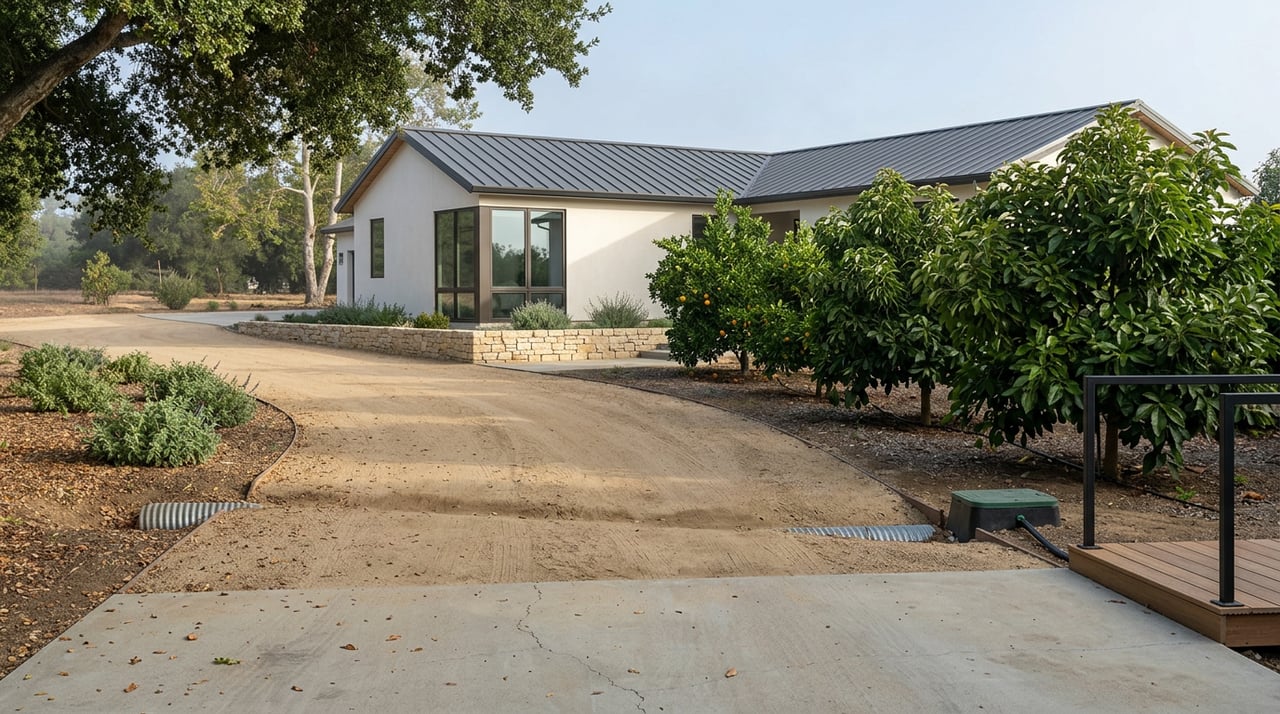
Many acreage parcels share private roads or driveways. Any work in the public right of way, such as a new driveway approach or culvert, usually requires a county encroachment permit. Maintenance for private culverts and inlets often falls to the adjacent owner.
- Review the encroachment permit process and fees before planning access work. (Encroachment permit fees)
Also confirm recorded access easements in title and verify any shared road maintenance agreements.
Utilities and connectivity
Electricity and natural gas serve most of Ventura County, but line‑extensions or service upgrades can be required on rural sites. If you plan pumps, shops, or barn electrification, ask the utilities about capacity and interconnection early. For internet, check address‑level availability across wired, fixed wireless, and satellite options.
Wildfire and AB‑38 inspections
Parts of Somis fall within High or Very High Fire Hazard Severity Zones. For those parcels, state law requires seller disclosure under AB‑38 and, in Ventura County, a real estate inspection to confirm defensible space. Budget for vegetation management and fuel reduction if needed.
- Review AB‑38 guidance and the county’s inspection steps. (VC Fire AB‑38 info)
What you plan to do matters
Your end use changes the due diligence you need. Here are focused checklists for three common scenarios.
Hobby farm checklist
- Get a zoning verification letter to confirm residential plus accessory agricultural uses and whether a CUP is needed. (Zoning Ordinance)
- Pull title and recorded easements. If you plan direct sales or a farmstand, check county and Agricultural Commissioner rules.
- Request septic permits and capacity. Bedroom changes or added housing usually require an OWTS review. (OWTS guidance)
- Confirm water source and costs. Ask for well reports and talk to the local water provider about service and rates. (Waterworks districts)
- Check soils and drainage. If you plan orchard beds, order a soil test and review regional SGMA documents for hydrogeologic context. (SGMA portal)
Red flags: failing or undersized septic, weak well yield, or recorded covenants that limit retail or visitor access.
Equestrian or small boarding operation
- Calculate allowed animal units for your zone and lot size. Confirm if boarding or lessons change the use category and require a CUP. (NCZO animal standards)
- Pull building permits for barns, hay storage, and tack rooms. Confirm current building and fire code requirements. (Building and Safety)
- Plan manure management and runoff control. Understand neighbor proximity and nuisance risks. State Right‑to‑Farm provisions offer some protection but good containment and communication matter. (Right‑to‑Farm context)
- Confirm water delivery points, pump pressure, and access for hay deliveries and trailers.
Red flags: inadequate fire access and turnarounds, barn setback issues, or prior code complaints for noise or runoff.
Small orchard or specialty tree crop
- Test soil suitability, salinity, and drainage. Review slopes and cold pockets that affect specialty crops. (SGMA portal)
- Match irrigation needs to supply. Verify well yield and any Fox Canyon allocation limits before planting. (Fox Canyon legal background)
- Coordinate pesticide and buffer practices with the Agricultural Commissioner when required.
Red flags: high‑salinity conditions, limited allocations, or soils mapped as poor for tree crops.
A due diligence sequence that works
Follow this order to avoid surprises and protect your escrow timeline.
- Pull title and the prelim. Confirm recorded access easements, road agreements, and any conservation easements.
- Gather APN‑specific files from the seller and county: OWTS records, well completion reports, building permits, and any CUPs or conditions.
- Order a zoning verification letter from County Planning and confirm any Williamson Act enrollment. (Zoning Ordinance)
- Call Fox Canyon and the local water provider to confirm allocations, pumping limits, and connection options. (SGMA portal)
- Schedule site inspections: septic professional, soils and percolation testing if needed, and a licensed well driller or hydrogeologist for pump tests. Add a barn or stable inspection for equestrian properties. (OWTS guidance)
- Check wildfire mapping and, if in a High or Very High zone, request the AB‑38 real estate inspection and price any defensible space work. (VC Fire AB‑38 info)
- If you plan direct sales or agritourism, verify local sales and food safety rules with the Agricultural Commissioner and Environmental Health.
Bring in a team that knows land and lifestyle
Acreage in Somis rewards careful planning. When you align zoning, water, septic, and access with your goals, you reduce risk and unlock value. If you want help matching a property’s potential with your vision, you deserve a team that understands barns, arenas, wells, and how to present a rural estate to the market when it is time to sell.
If you are exploring acreage, equestrian properties, or small orchards in Somis or nearby communities, connect with a boutique team that pairs equestrian expertise and construction fluency with premium marketing. Start the conversation with The Jenna Kaye Group for a private consultation tailored to your goals.
FAQs
What makes Somis different from city acreage in Ventura County?
- Somis is unincorporated, so Ventura County planning controls zoning and permits, not a city. Use the county’s Somis land use maps to see designations. (General Plan maps)
How do Fox Canyon rules affect a property with a well in Somis?
- Fox Canyon manages groundwater allocations and pumping in local basins. New wells or increased pumping can be limited, so confirm allocations and rules before you rely on a private well. (Legal background)
Do I need county approval for a barn or stable on Somis acreage?
- Often yes. Many barns and stables need building permits, and animal‑keeping limits depend on zoning and lot size. Commercial boarding can require a Conditional Use Permit. (NCZO standards)
What should I check on septic before closing on rural land?
- Pull the OWTS permit file, recent maintenance records, and any certifications. If you plan to add bedrooms or a guest unit, expect a septic review and possible upgrades. (OWTS guidance)
Are there wildfire compliance steps when buying or selling in Somis?
- If the property is in a High or Very High Fire Hazard Severity Zone, AB‑38 requires seller disclosure and a county real estate inspection for defensible space. Budget for any required vegetation work. (AB‑38 info)